If you are VAT registered and sell used cars, the margin scheme is likely to be one of the most important rules in your business. Used properly, you account for VAT on your profit rather than the full selling price. Used carelessly, it can leave you with a much larger VAT bill than you expected.
This guide covers the basics in plain English. It is not tax advice. VAT rules have plenty of detail and exceptions, so check with your accountant before relying on any of it. HMRC's own guidance is the authority: how to account for VAT using the VAT margin scheme, which replaced VAT Notice 718 and 718/1, and the specific page on second-hand motor vehicles.
How does the VAT margin scheme work for used cars?
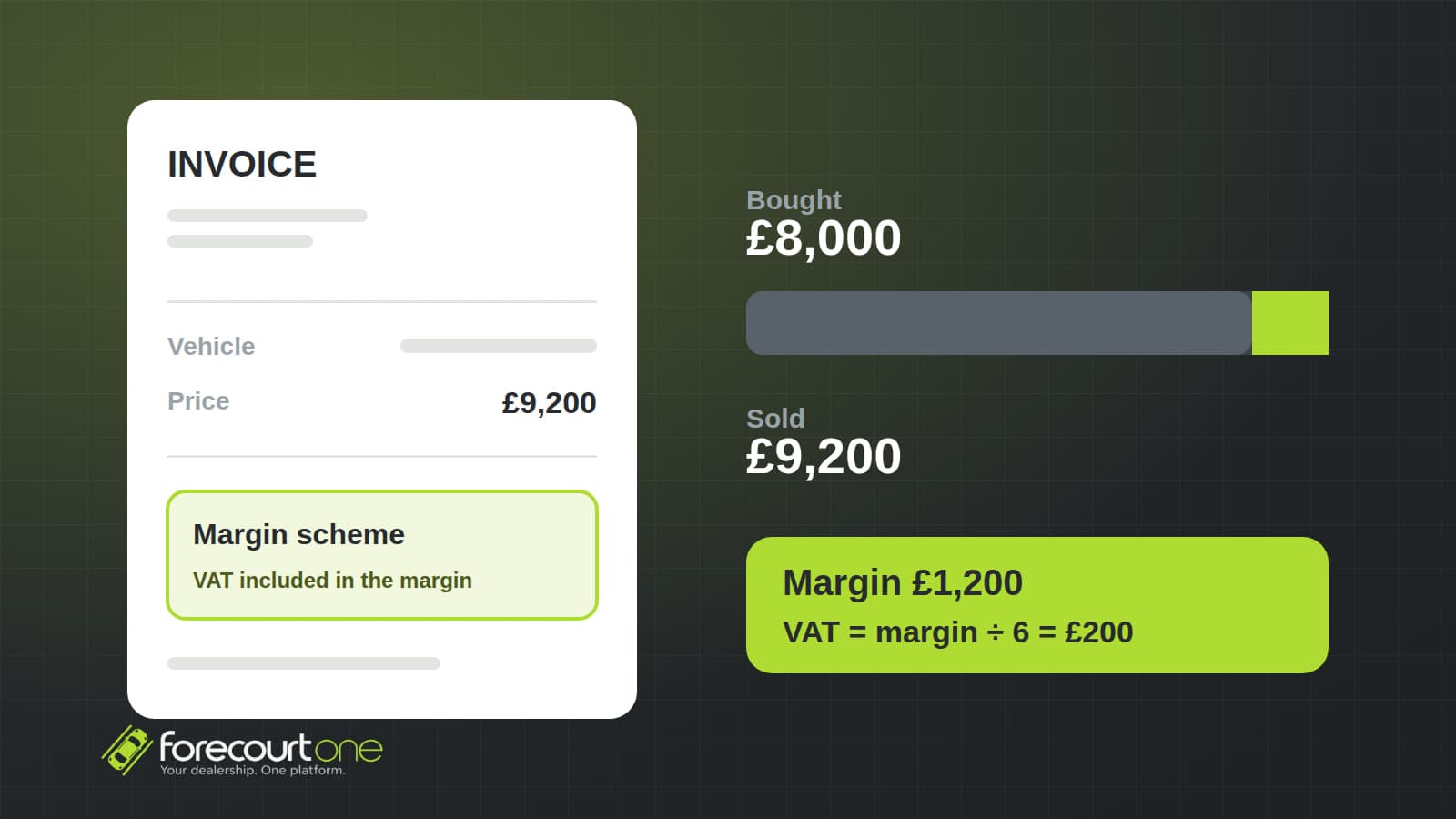
You work out the margin by taking the purchase price away from the selling price, then account for VAT on that margin only. At the 20% standard rate the VAT due is one sixth of the margin. If there is no margin, because you sold at or below cost, there is no VAT to pay on that car.
A worked example
- You buy a car from a private seller for £8,000.
- You sell it for £9,200.
- Your margin is £1,200.
- The VAT due is £1,200 ÷ 6 = £200.
So you account for £200 of VAT on that sale, rather than VAT on the full £9,200. HMRC explains the calculation in how to work out the margin and VAT due.
Which used cars qualify for the margin scheme?
Broadly, second-hand cars you bought without VAT shown separately: typically from private sellers, from other dealers selling under the margin scheme, or from businesses that could not reclaim VAT on the car. You cannot use it for a car bought on an invoice showing VAT separately, or for Category A and B write-offs.
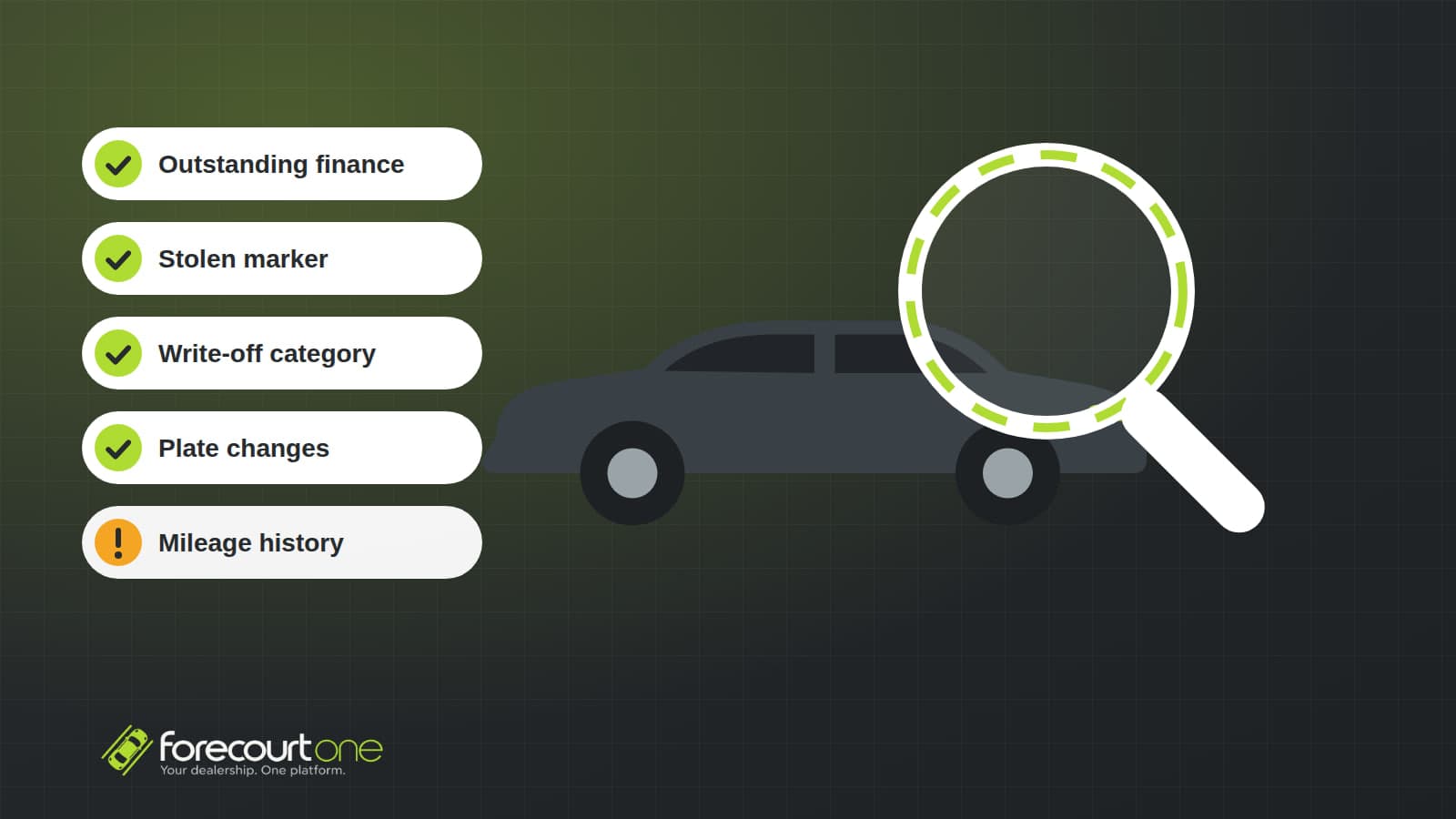
A car bought on a VAT invoice is often called a "qualifying" car. You usually charge VAT on its full selling price and can normally reclaim the VAT you paid when you bought it. Knowing which type each car is from the day you buy it saves confusion when you sell. Write-off categories are explained in our guide to vehicle history checks.
Can you add preparation costs to the purchase price?
No. For the margin calculation, HMRC says the purchase price is what you paid for the car and must not include preparation, repairs, refurbishment, accessories or overheads. If VAT was charged on those costs, you can usually reclaim it in the normal way. Record them separately so your profit figures still reflect them.
A few other points often catch dealers out:
- Losses do not offset profits. A car sold below cost has no VAT to pay, but the loss cannot reduce the VAT due on other margin sales.
- The MOT is part of the sale. HMRC treats a car sold with an MOT as a single supply, so the full selling price, MOT included, goes in the stock book and the margin calculation.
- The registration threshold counts sales, not margins. It is generally the full selling prices that count when deciding whether you must register for VAT. The threshold changes from time to time, so check the current figure on GOV.UK.
What must a margin scheme invoice show?
A margin scheme invoice shows the seller's and buyer's details, the stock book number, the invoice number, a description of the car and the total price, with no VAT shown separately. It must also carry the words "margin scheme - second hand goods". For cars, HMRC also wants the registration number and make and model.
HMRC's VAT margin schemes guide lists the details:
- your name, address and VAT registration number
- the buyer's name and address
- the car's stock book number
- the invoice number and a description of the car
- the total price, without VAT shown separately
- the words "margin scheme - second hand goods"
For vehicles, HMRC also asks for the registration number (or VIN if there is none) and a description such as make and model on purchase and sales invoices. For a qualifying car, the invoice is a normal VAT invoice showing the net price, the VAT and the total.
What records does a margin scheme dealer need to keep?
A stock book that tracks each car individually, plus copies of the purchase and sales invoices for every car. The stock book links each purchase to its sale: stock number, dates, seller, buyer, description, prices, the margin and the VAT due. HMRC says you must keep VAT records for 6 years.
HMRC's record keeping for VAT (Notice 700/21) covers the general rules. VAT-registered businesses also need to follow Making Tax Digital for VAT returns, so it is worth keeping records digitally from the start. Our guide to going paperless at your dealership covers how, and used car stock management covers the day-to-day stock book.
What if you are not VAT registered?
If your taxable turnover is below the registration threshold and you have not registered voluntarily, you do not charge VAT and the margin scheme does not apply. You still need good records of purchases, costs and sales for your accounts and tax return. Keep an eye on your rolling 12-month sales, because full selling prices count towards the threshold.
How Forecourt One helps
Forecourt One records whether each car is a margin scheme or qualifying vehicle when you add it, and your stock book holds the purchase and sale details for every car. Sale invoices are produced to match: margin scheme invoices state that VAT is included in the margin and do not show it as a separate line, while qualifying invoices show the net, VAT and total. See a sold car's profit and VAT breakdown in the interactive demo.
To see invoicing on your own stock, start a free 14-day trial or book a demo. And as always with VAT, check the details with your accountant.
Questions
Can I use the margin scheme on every used car I sell?
No. It is generally for cars bought without VAT shown separately, such as from private sellers. Cars bought on a VAT invoice, and Category A and B write-offs, cannot use it. Check individual cases with your accountant.
Do I show VAT on a margin scheme invoice?
No. VAT must not be shown as a separate amount on a margin scheme invoice, and the invoice should carry the wording "margin scheme - second hand goods".
Can I add preparation costs to the purchase price?
Not for working out the margin. If VAT was charged on those costs, you can usually reclaim it in the normal way. Confirm the treatment with your accountant.
What happens if I sell a car at a loss?
There is no VAT to pay on that car, but the loss cannot be used to reduce the VAT due on other margin scheme sales.