For most independent dealers, stock is the biggest thing the business owns. Every car on the forecourt is money already spent, waiting to come back with a profit on top. Managing it well does not need a full-time administrator. It needs accurate records, a few numbers you trust and a routine you stick to, whether you have ten cars or a hundred.
What is the best way to manage used car stock?
Keep a single, up-to-date stock book, record every cost against the car it belongs to, track days in stock and review your oldest cars every week. The method matters less than the habit: one place for the information, updated the day things happen, and a regular decision on every slow car.
What should a dealer stock book include?
A dealer stock book should hold, for each car, the registration and VIN, a description, the purchase date, price and seller, every cost added since, the asking price and current status. Once the car sells, add the sale date, price and buyer. VAT-registered dealers using the margin scheme have extra HMRC requirements.
For each car you should be able to see at a glance:
- registration, VIN, make, model, derivative and mileage
- the date you bought it and who from
- what you paid
- what you have spent on it since
- the asking price
- its status: in preparation, on sale, reserved or sold
- once sold, the sale date, price and buyer
If this information lives in a notebook, a spreadsheet and three people's heads, it drifts out of date. Make it the rule that every purchase, cost and sale goes into one place on the day it happens.
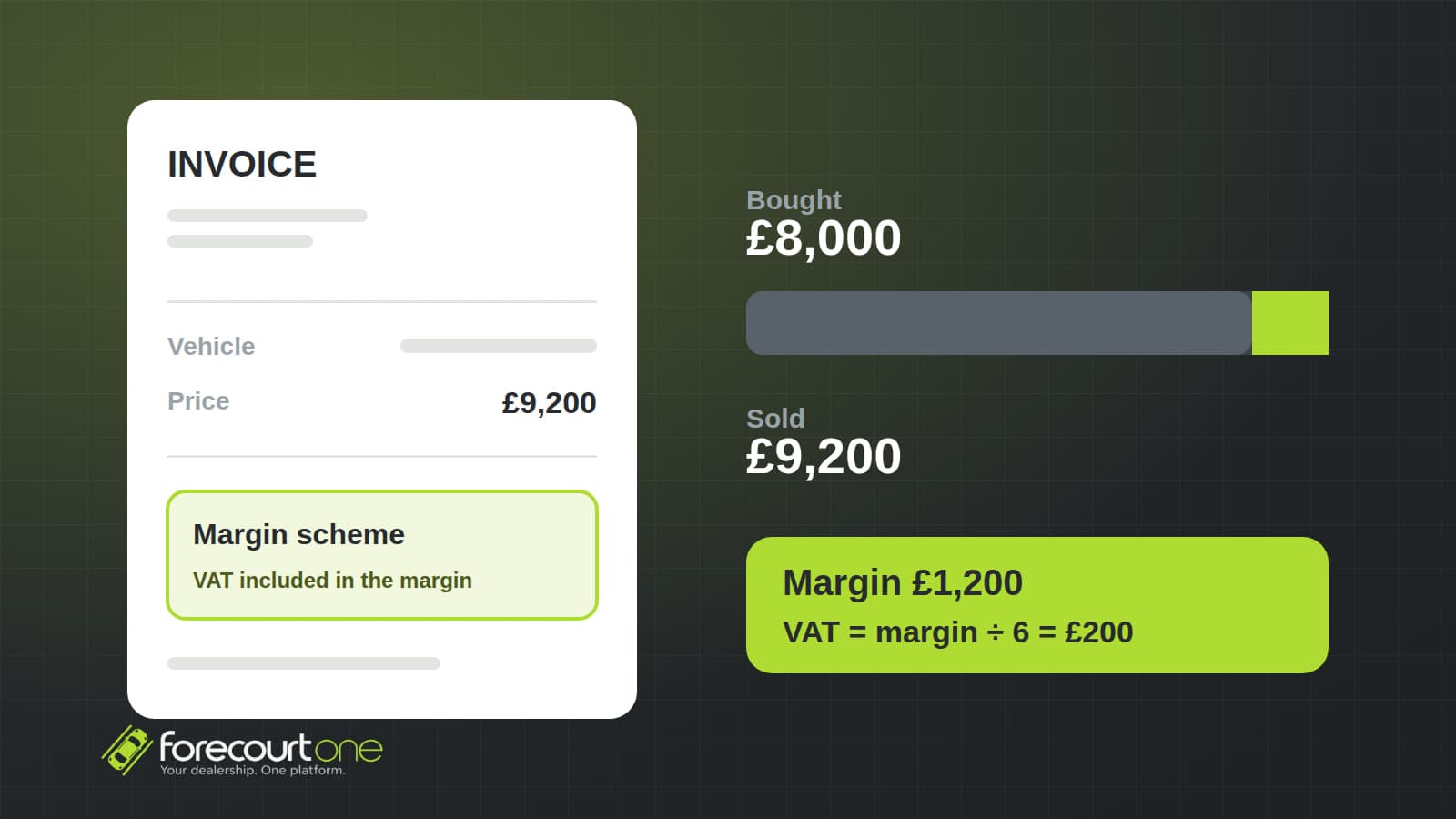
If you are VAT registered and use the margin scheme, your stock book is part of the records HMRC expects you to keep. HMRC's guidance on second-hand motor vehicles and the margin scheme lists details such as the registration number and a description of each car. Our guide to the VAT margin scheme for used car dealers covers the basics, and your accountant can confirm what your records need.
How do you work out the true cost of a car?
Add every cost of getting the car ready to sell to the price you paid: transport, servicing, parts, tyres, bodywork, valeting, MOT work and photography. Record each cost against the car when it happens. The total is what the car has really cost you, and the starting point for pricing and profit.
Recording costs as you go does two jobs. It shows your real profit when the car sells, and it warns you early when a car is soaking up more money than planned, so you can decide whether to keep spending or move it on. Note that for VAT margin scheme calculations, preparation costs are treated differently from the purchase price, so keep them as separate lines.
Why does days in stock matter?
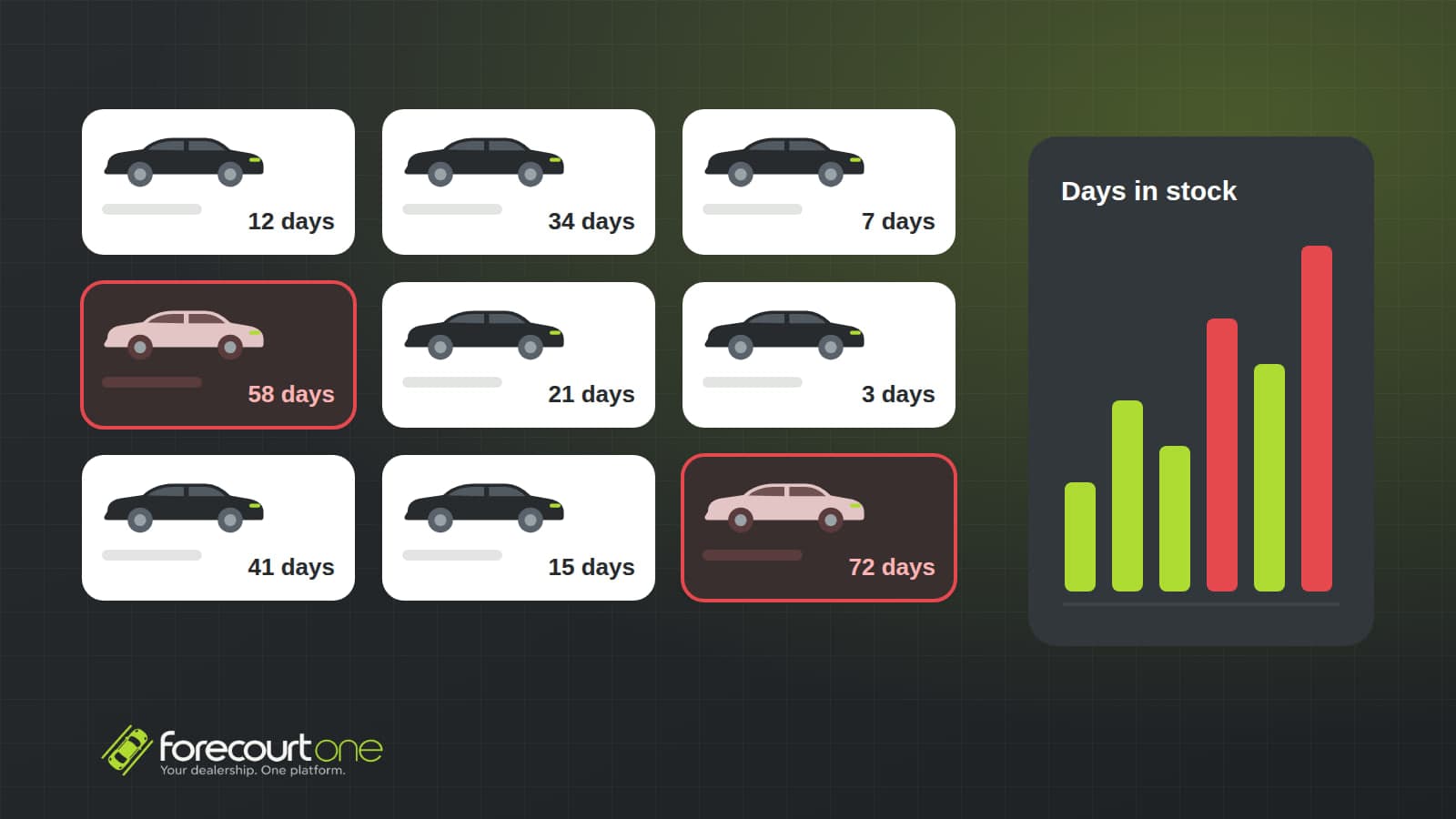
Days in stock is how long a car has been with you, and time costs money. Every day a car sits unsold it ties up cash you could use to buy something that sells faster, and if you fund stock with borrowing it adds interest. It is the earliest sign that a car's price or advert needs attention.
There is no single right number. It depends on the type of car, the price point and the time of year. What matters is knowing your own normal and spotting cars that drift well beyond it.
How do you run an aged stock review?
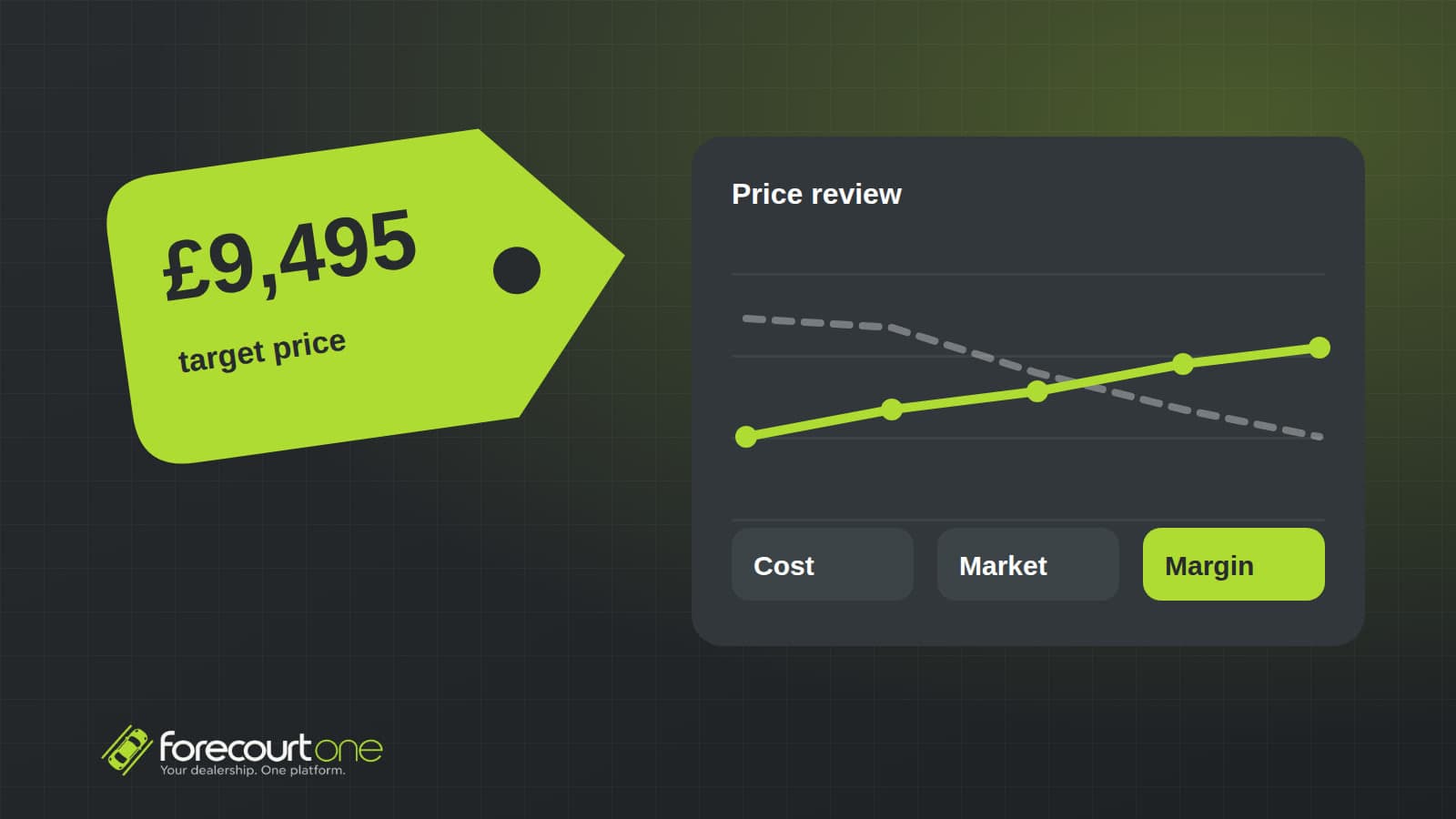
Once a week, list the cars that have been in stock longest and make a decision on each. Check the price against similar cars for sale, check the advert's photos and description, look at the enquiries it has had, then choose to reprice, improve the advert, sell to the trade or hold.
Half an hour is usually enough. For each car, ask:
- Is it priced right? Compare it with similar cars for sale now. Our guide to pricing used cars for profit sets out a method.
- Is the advert doing its job? Check the photos, the description and that key features are listed.
- Is something putting buyers off? Plenty of enquiries but no sale may point to price or condition. No enquiries may point to the advert.
- What is the plan? Adjust the price, improve the advert, move it to trade or hold it, and set a date to look again.
The goal is not to sell every car at any price. It is to make a deliberate decision about each slow car rather than letting it sit.
How should stock management shape your buying?
Look back at what has sold quickly and profitably and what has lingered. Over time, patterns appear: makes, price bands or body styles that suit your customers and location. Let those patterns guide buying, and be wary of a bargain that does not fit what your customers come to you for.
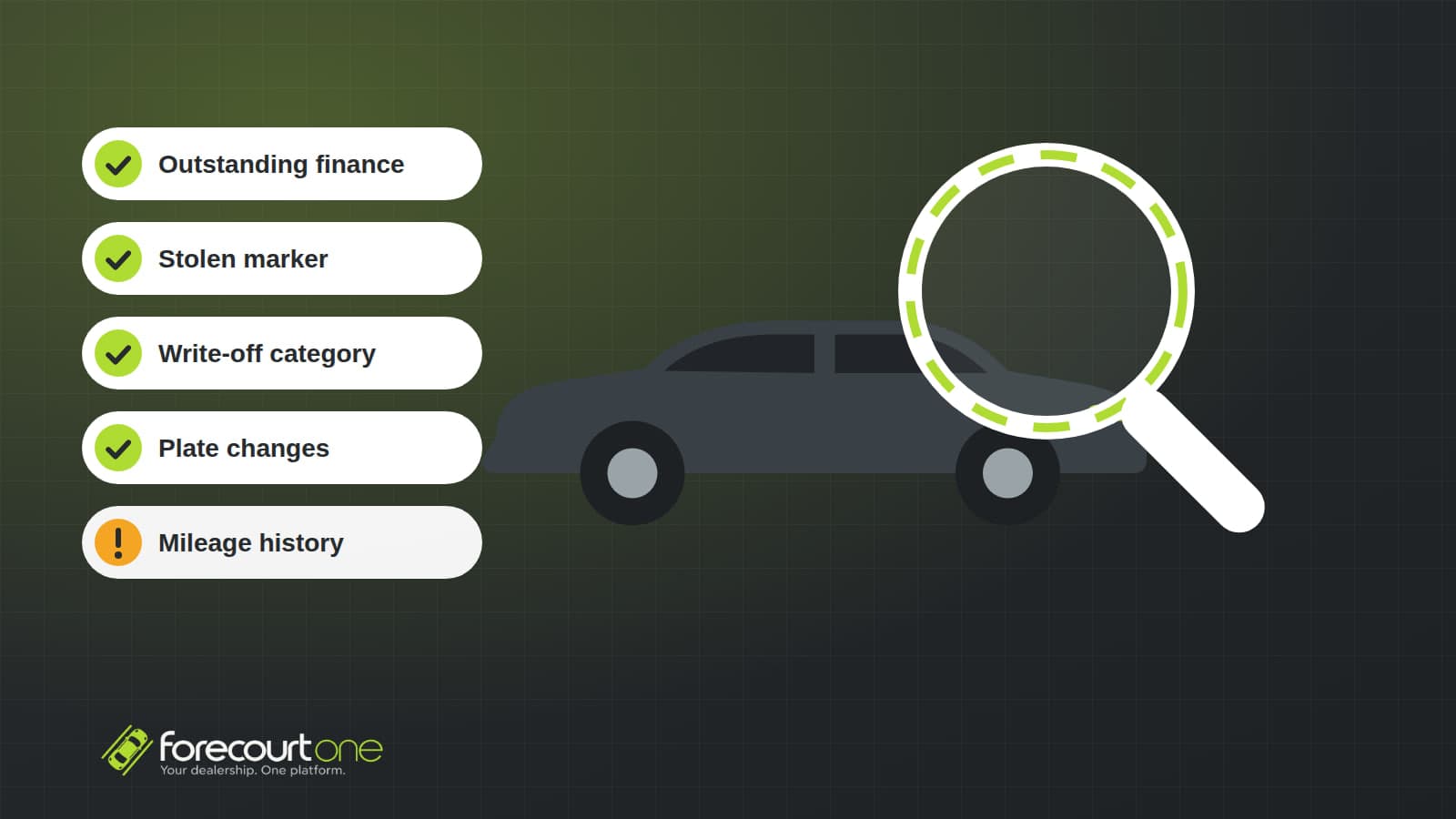
Before you buy, run the checks in our guides to checking an MOT history and vehicle history checks, so you are not adding a problem car to stock. When cars come in and go out, keep the DVLA side up to date too: GOV.UK explains what to tell DVLA when you buy or sell a vehicle, including as a motor trader.
Look at the whole business, not just each car
Profit per car matters, but so do the overheads that keep the doors open: rent, rates, insurance, wages, utilities and advertising. A month with plenty of sales can still be a poor month if overheads have crept up. Reviewing profit per car alongside company bills gives you an honest picture.
How Forecourt One helps
Forecourt One is built around this routine. Your stock book holds every car with its purchase price, costs and status, and adding a car by registration brings in the vehicle details and MOT history. Per-vehicle profit shows what each car really made. Pro and Enterprise add days in stock and an aged stock view, company bills, profit and loss, and graphs. See adding stock and the dashboard in the interactive demo, or compare packages on our pricing section.
To try it with your own stock, start a free 14-day trial or book a demo.
Questions
What is a good number of days in stock for a used car?
There is no single right figure. It depends on the type of car, the price and the time of year. Track your own average and look closely at cars that run well beyond it.
What should a dealer stock book include?
At minimum: the vehicle details, purchase date and price, who you bought it from, costs added, the sale price, the sale date and who you sold it to. If you use the VAT margin scheme, check with your accountant that your records meet HMRC's requirements.
How often should I review aged stock?
Weekly works well for most independent dealers. It is often enough to act early without spending too long on admin.
Should I include preparation costs in my profit figures?
Yes. Transport, parts, labour, valeting and similar costs all reduce what you really make on a car, so record them against it.