Pricing is where buying, preparation and selling come together. Get it right and cars move at a healthy profit. Get it wrong one way and a car sits for weeks. Get it wrong the other way and you sell quickly but leave money behind. No formula suits every car, but a consistent method makes each decision clearer.
How do you price a used car for sale?
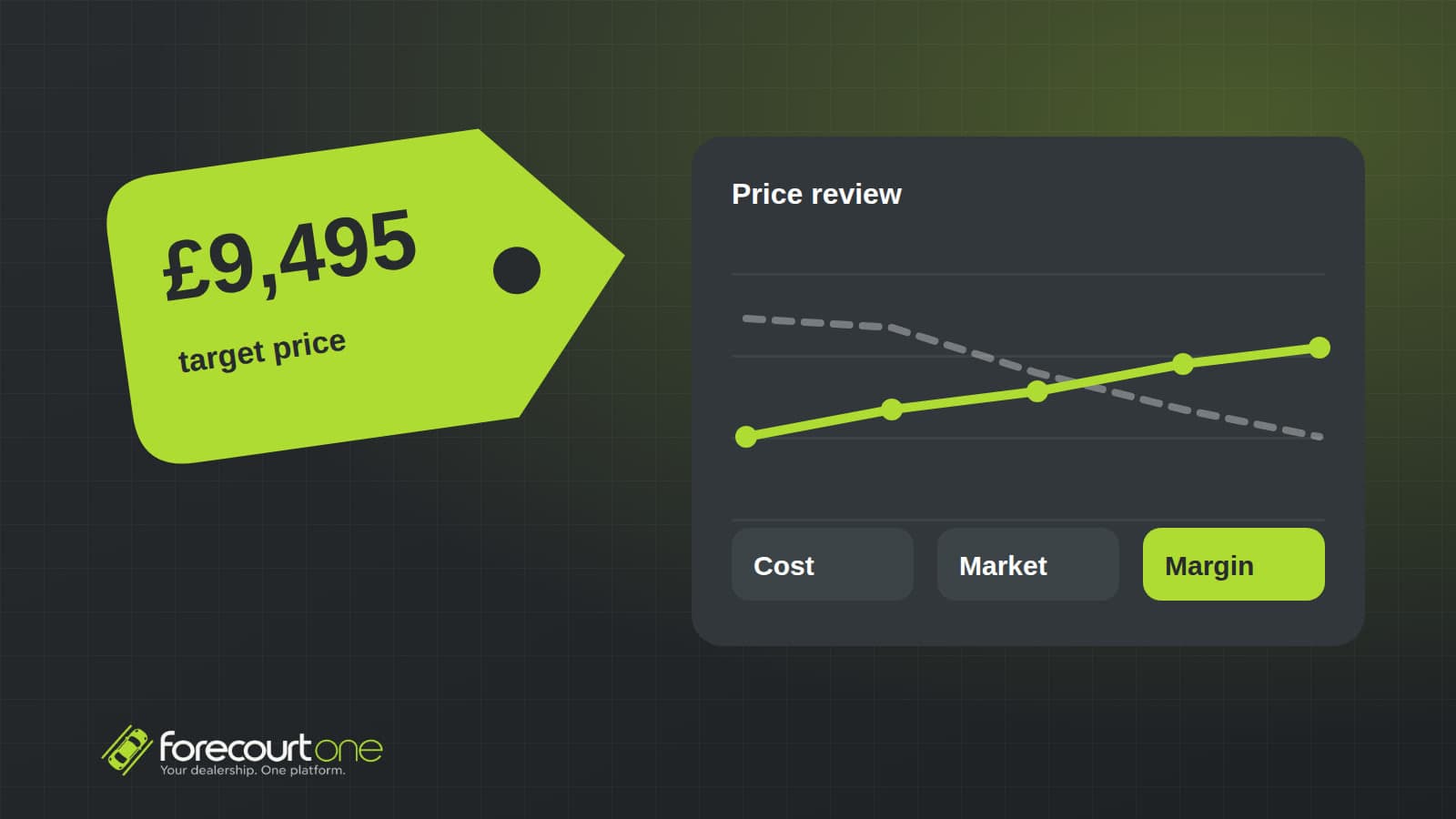
Start with the true cost of the car, then compare it honestly with similar cars currently for sale. Set a target price where you expect to sell and a floor below which the car is not worth selling. Advertise at the target, and review the price weekly against enquiries and new competition.
How do you work out a car's true cost?
Add every cost of getting the car sold to the price you paid: transport, parts, labour, tyres, bodywork, servicing, MOT work, valeting, photography, any warranty you include and a fair share of advertising. The total is your break-even point. Any asking price below it loses money, however quickly the car sells.
In full, that means:
- the purchase price
- transport or collection
- parts, labour, tyres and bodywork
- servicing and MOT work
- valeting and photography
- any warranty you include
- a fair share of advertising
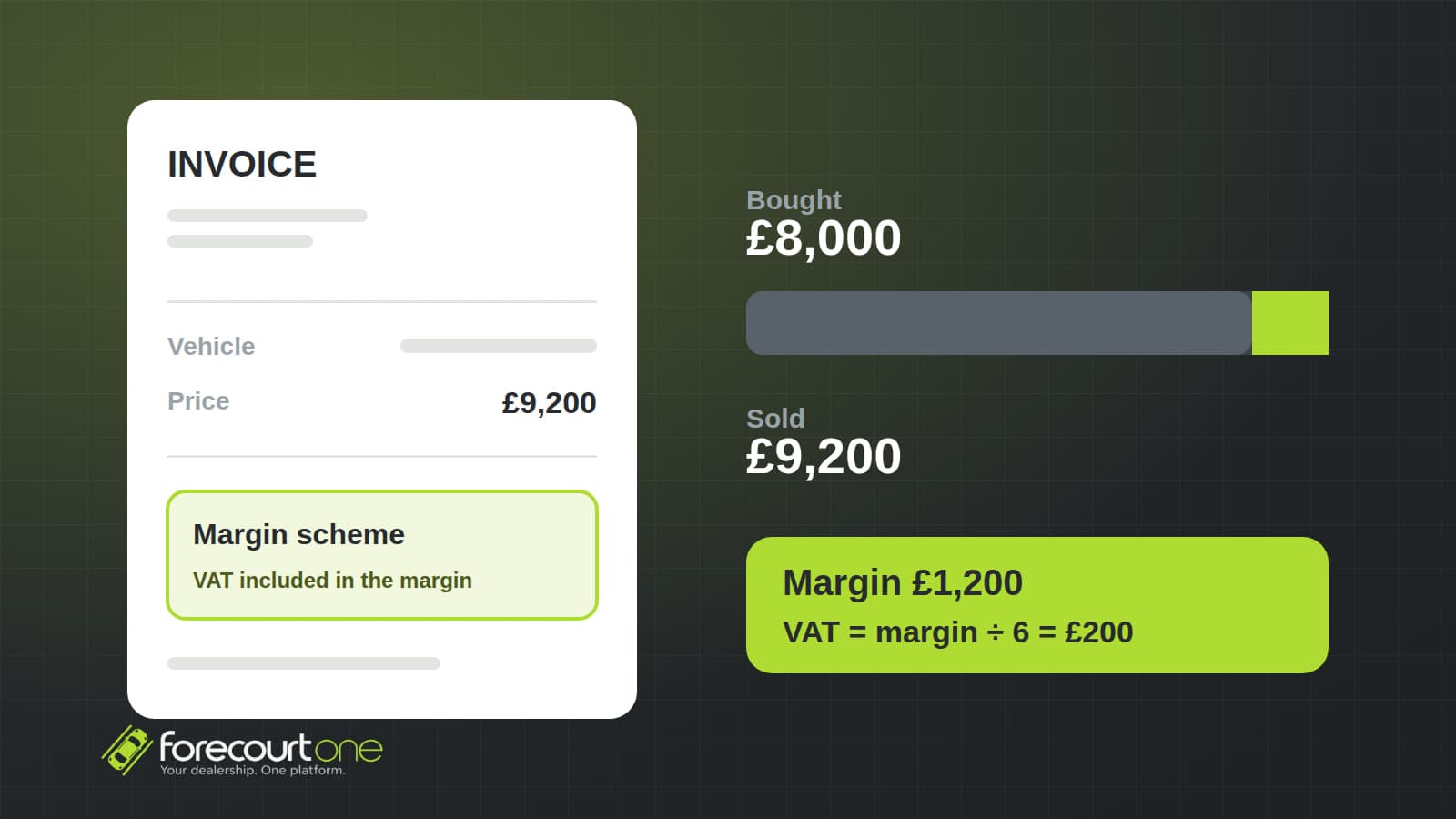
Only when you know the true cost can you see what a given price actually earns. If you are VAT registered and the car goes through the margin scheme, VAT is due on your margin, so part of every pound of profit belongs to HMRC. Our guide to the VAT margin scheme for used cars explains how, and your accountant can confirm how it applies to you.
How do you find comparable cars to price against?
Look for cars for sale that match yours as closely as possible: same make, model and derivative, engine and gearbox, similar year and mileage, the same trim and key options, and comparable condition. Check both nearby and national listings, because buyers will travel for the right car but most start locally.
Check the details rather than trusting a listing title. The free DVLA vehicle enquiry service confirms basics such as engine size and year of manufacture, and the GOV.UK MOT history shows a comparable car's recorded mileage.
Then be honest about where your car sits in that group. Lower mileage, a full service history, fresh tyres or a recent cambelt change justify a higher price. A scuffed bumper, a missing service stamp or a less popular colour count against it.
Should you set a target price and a minimum price?
Yes. Before the car goes on sale, write down a target price, where you expect to sell based on the comparisons, and a floor, the lowest price you would accept based on true cost and the minimum profit that makes the car worthwhile. Deciding both in advance keeps negotiation consistent and avoids agreeing a number you regret later.
Does the advert affect the price you can ask?
Yes. A buyer's first impression of value comes from the advert, not the forecourt. Clear photos, an honest description and the details buyers look for, such as mileage, service history, keepers and MOT expiry, make a price easier to justify. A weak advert can make a fairly priced car look expensive.
Make sure it covers:
- mileage, service history, number of keepers and MOT expiry
- the features buyers search for
- what you include, such as a warranty, a fresh service or a full valet
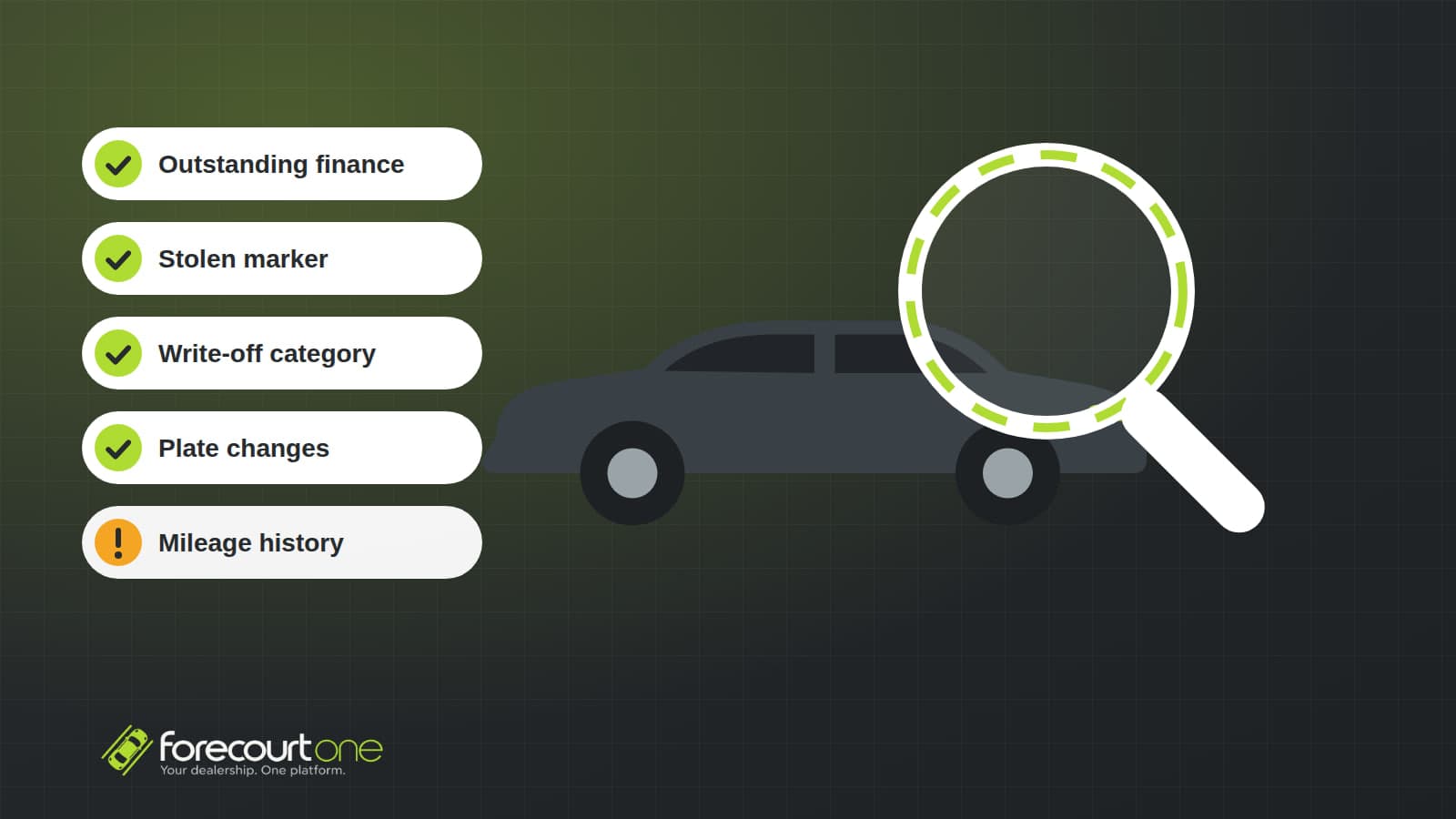
A clean MOT and vehicle history is worth mentioning. Our guides to checking an MOT history and vehicle history checks explain what to look for. Describe the car accurately: what you say in an advert forms part of what the customer is buying.
When should you reduce the price of a used car?
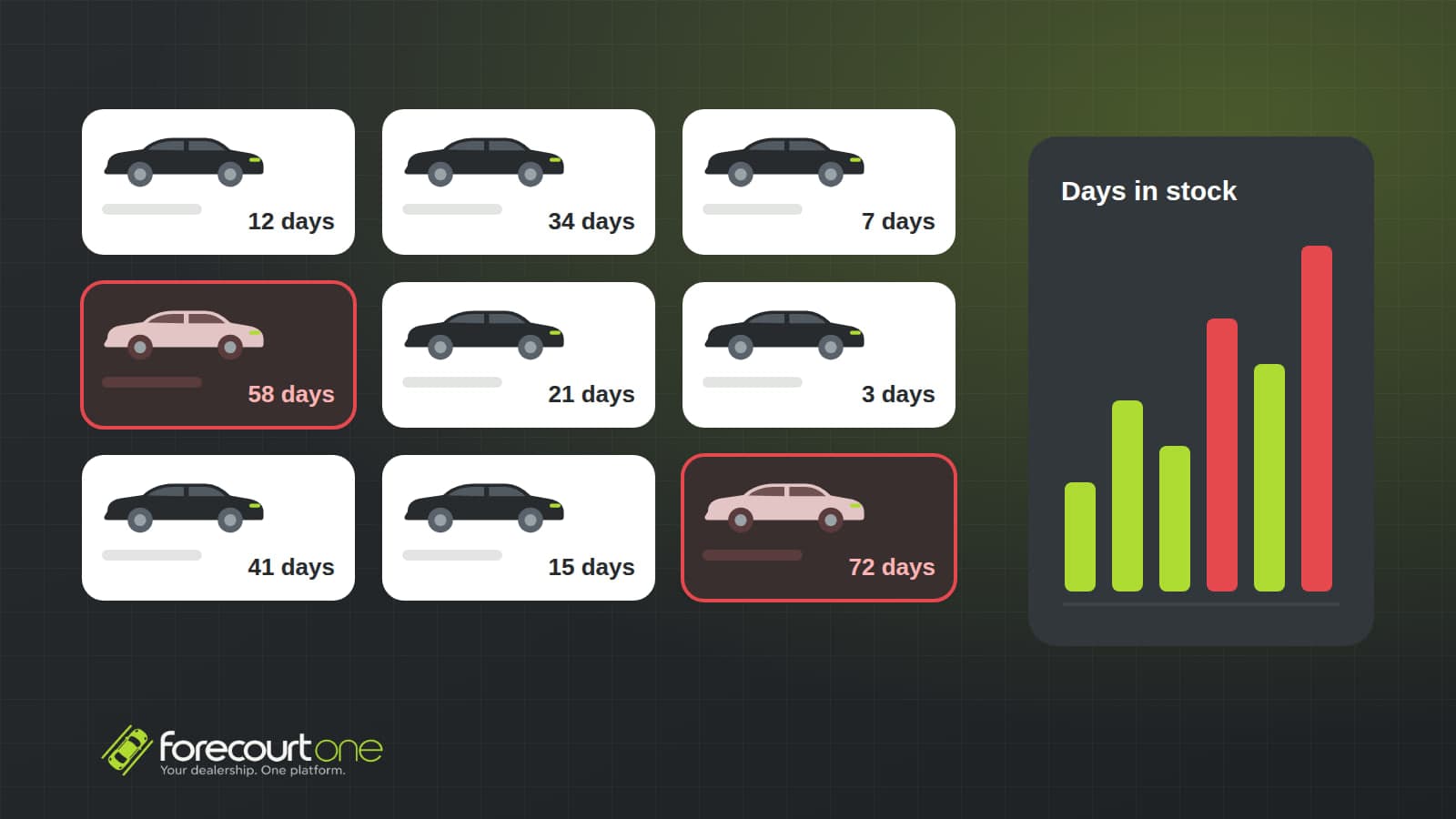
Review prices weekly. Consider a reduction when a car has had plenty of views but few enquiries, when a rival has listed a similar car for less, or when it has passed your usual days in stock. Small, timely changes often sell a car sooner than waiting and then making one large cut.
- Look at enquiries. Views without enquiries can mean the price is high or the advert is weak.
- Re-check the comparisons. New cars come onto the market all the time.
- Know when to move it on. If several reviews have not produced a sale, selling to the trade and reinvesting may be the better choice.
Our guide to used car stock management includes a weekly aged stock review that fits alongside this.
How do you learn from each sale?
When a car sells, compare the final price with your target and floor, and note how many days it took. Over time this shows which cars you price well, where you tend to be optimistic, and which cars earn the most for the time and money they tie up. That feeds back into better buying, where good pricing really starts.
How Forecourt One helps
Forecourt One keeps the numbers behind every price in one place. Each car in your stock book holds its purchase price and the costs added since, so per-vehicle profit shows what you really made when it sells. Pro and Enterprise add days in stock and an aged stock view, so the cars due a price review stand out each week. See a sold car's profit breakdown in the interactive demo, or compare packages on our pricing section.
To see your own stock this way, start a free 14-day trial or book a demo.
Questions
How do I work out the right price for a used car?
Start with the true cost of the car, compare it honestly with similar cars for sale, then set a target price and a lowest acceptable price before you advertise.
How often should I review used car prices?
Weekly works well for most dealers, with extra attention to cars that have been in stock longer than usual.
Should I include preparation costs when pricing a car?
Yes. Transport, repairs, servicing, valeting and similar costs all reduce your profit, so include them when you decide whether a price works.
Is it better to cut the price or sell to the trade?
It depends on the car and your costs. If several price reviews haven't produced a sale, selling to the trade and reinvesting the money is often the better choice.