Most dealers have a story about a car that looked right, drove well and still turned into a problem: a finance company in touch weeks after the sale, or a customer's own check showing a write-off nobody mentioned. A full vehicle history check is how you find those problems before the money changes hands.
What does a vehicle history check show?
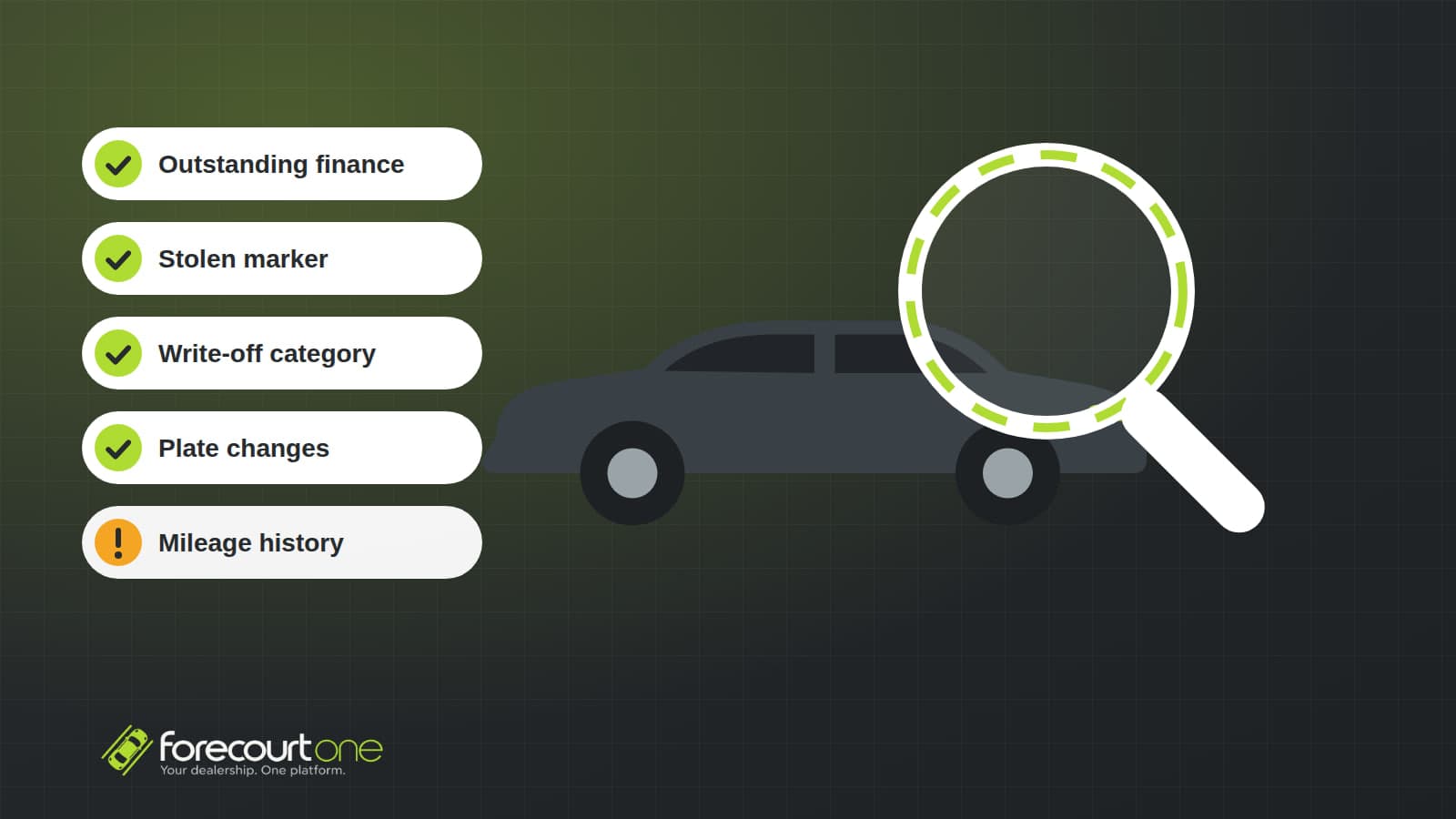
A full check usually covers outstanding finance, stolen markers, insurance write-off category, previous registration numbers, the number of keepers and mileage readings from several sources. Reports vary by provider, so confirm what is included. Together these cover the costliest risks a dealer cannot see by inspecting the car or reading its MOT history.
In more detail, a report typically includes:
- Outstanding finance: whether a finance agreement is still recorded against the car
- Stolen markers: whether the car is recorded as stolen
- Write-off category: whether an insurer has recorded the car as a total loss, and which category
- Plate changes: previous registration numbers
- Keeper history: how many registered keepers there have been
- Mileage history: readings from various records, so inconsistencies stand out
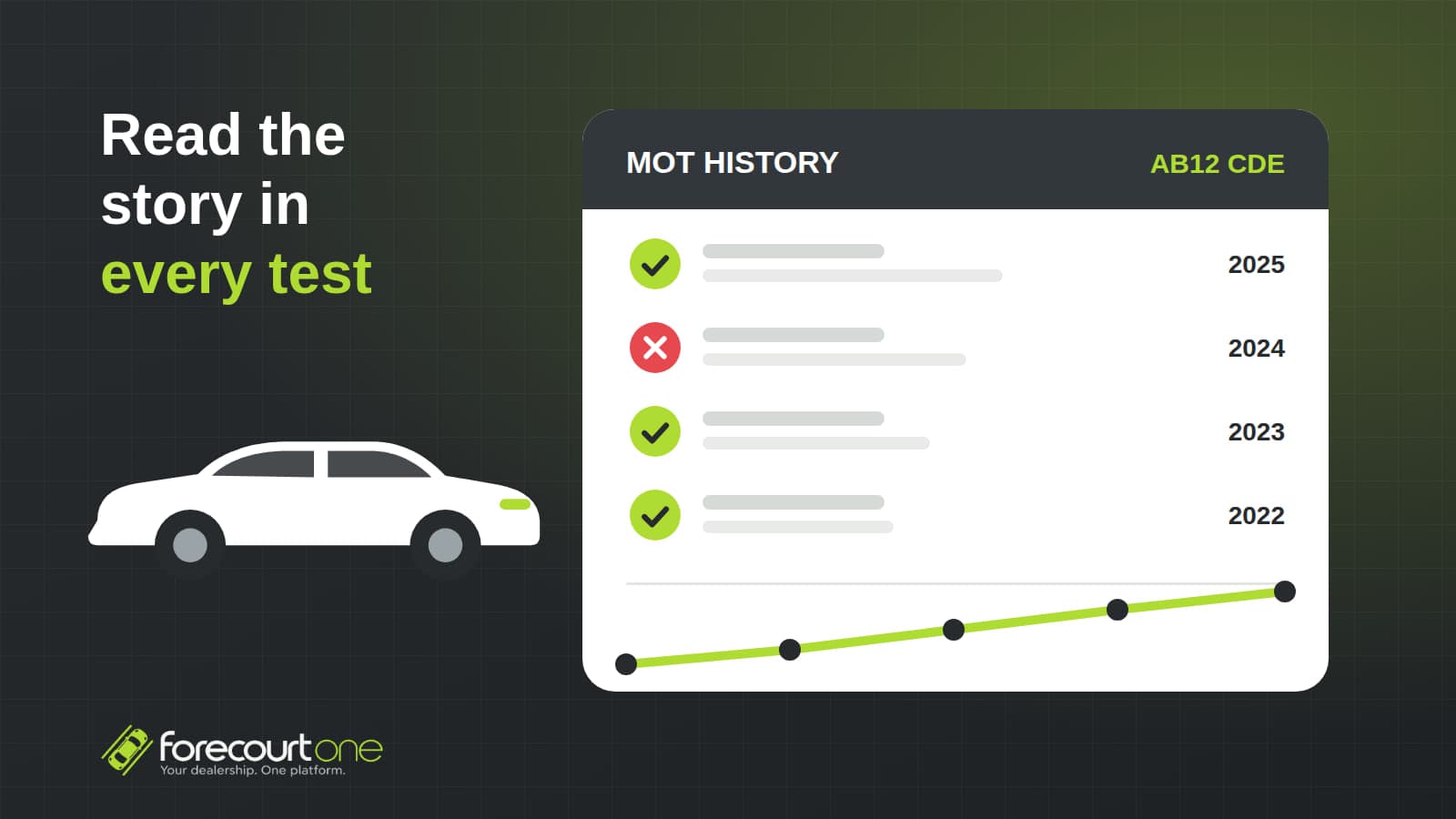
Some of this overlaps with the free GOV.UK MOT history, which we cover in how to check an MOT history before you buy. Finance and theft only show up in a history check.
Why does outstanding finance matter more to dealers?
When a car is on hire purchase, the finance company usually owns it until the agreement is paid off. The legal protection that can help some private buyers who unknowingly buy a car with finance owing does not generally extend to motor traders. A dealer can lose the car or have to settle the debt.
If a check shows finance, do not assume it will be sorted out later. Get written confirmation from the finance company that the agreement is settled, or pay the settlement directly as part of the deal, before you buy.
What should you do if a car has a stolen marker?
Do not buy the car. A stolen marker is a clear reason to stop, whatever explanation the seller offers. Keep a note of the registration, the seller's details and what you were told, and do not hand over money or the paperwork you were given. If you are unsure what to do next, contact the police on their non-emergency number.
What do the insurance write-off categories mean?
When an insurer decides a car is not worth repairing, it records a write-off category. Category A cars must be scrapped and Category B body shells crushed. Category S means repairable structural damage and Category N repairable non-structural damage. S and N cars can return to the road once properly repaired, but they are worth less.
GOV.UK's guide to insurance write-offs sets out the current categories:
- Category A: must be scrapped completely
- Category B: the body shell must be crushed, though some parts may be salvaged
- Category S: structural damage that can be repaired before the car returns to the road
- Category N: non-structural damage that can be repaired
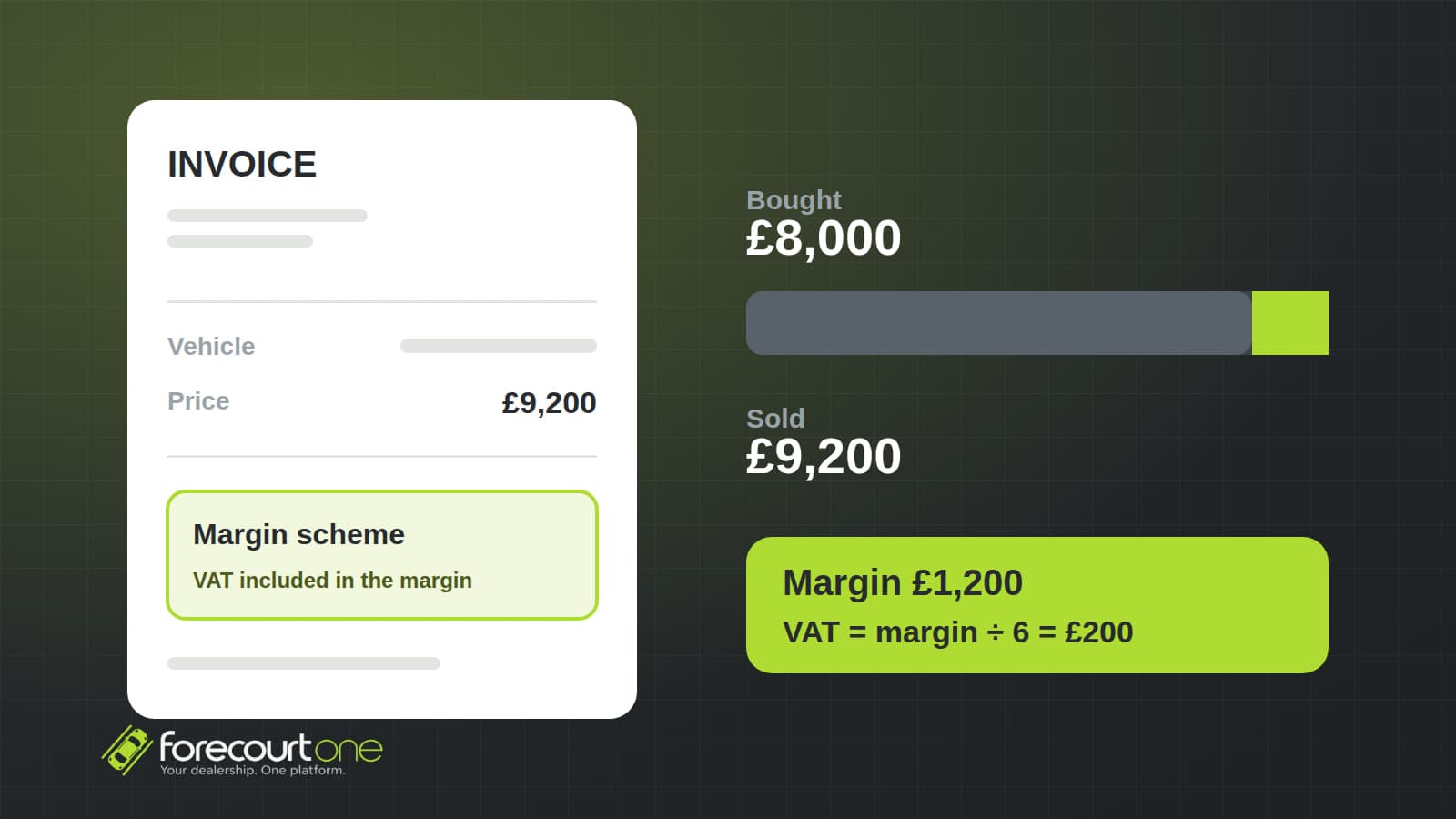
Category S and N cars can legally be repaired and sold, and some dealers specialise in them. Know before you buy, price the car to suit and tell your customer clearly. A buyer who finds a write-off record after the sale is likely to feel misled. Categories also matter for VAT: HMRC excludes Category A and B write-offs from the margin scheme, which we explain in the VAT margin scheme for used car dealers.
Why check plate changes and keeper history?
A private plate is common and usually harmless, but plate changes can also make a car harder to trace. Check that the report matches the V5C logbook and the VIN stamped on the car. The free DVLA vehicle enquiry service helps confirm the make, colour and when the V5C was last issued.
The number of keepers affects value and buyer confidence. Many keepers in a short time is not proof of a bad car, but it is a question worth asking.
What if the mileage history does not add up?
Readings from MOTs, services and other records should rise steadily. A reading that goes backwards, or a large gap with no explanation, needs answering before you buy. Selling a car with an incorrect mileage can cause serious problems, so walking away is usually the safer choice.
How do you build history checks into your buying routine?
Run the check on every car before you agree a price, part exchanges included. Match the registration, VIN, make, model and colour on the report to the car and its V5C, save the report with the car's record, and run a fresh check if the deal takes several days to complete.
- Check before you commit. Run it before you agree a price, not after the car arrives.
- Match the details. Registration, VIN, make, model and colour should match the car and the V5C.
- Keep the report. Save it with the car's record so you can show what you checked and when.
- Check again after a delay. If a deal takes days, a fresh check just before payment closes the gap.
- Include part exchanges. They carry the same risks as any other purchase.
How Forecourt One helps
Forecourt One builds the checks into adding a car. On every package, entering a registration brings in the vehicle details and MOT history. On Pro and Enterprise, the full vehicle history check covers outstanding finance, stolen markers, write-off and insurance category, plate changes, keeper count and mileage history, and saves the results with the car in your stock book. Compare what each package includes on our pricing section, or walk through a lookup in the interactive demo.
HPI is a registered trademark of HPI Ltd. Forecourt One is not affiliated with HPI Ltd. Our history check uses Check Car Details data.
To see it on a real registration, start a free 14-day trial or book a demo.
Questions
What is an HPI-style check?
It is a vehicle history check covering outstanding finance, stolen markers, insurance write-offs and more. HPI is one well-known provider, and several others offer similar checks.
Can I sell a Category S or Category N car?
Yes. Category S and N cars can be repaired and returned to the road. Make sure the repair is done properly and tell your buyer about the category clearly before the sale.
What should I do if a car shows outstanding finance?
Don't buy until the finance is settled. Get written confirmation from the finance company, or arrange for the settlement to be paid directly as part of the purchase.
Do I need a history check on a part exchange?
Yes. Part exchanges carry the same risks as any other purchase, so check them before you agree a value.