Every used car you buy for the forecourt is a bet on what it will cost to get ready and how quickly it will sell. The MOT history is one of the cheapest ways to improve those odds. It costs nothing, takes a minute, and often says more about how a car has been looked after than a quick walk round on a busy auction day.
How do you check the MOT history of a car?
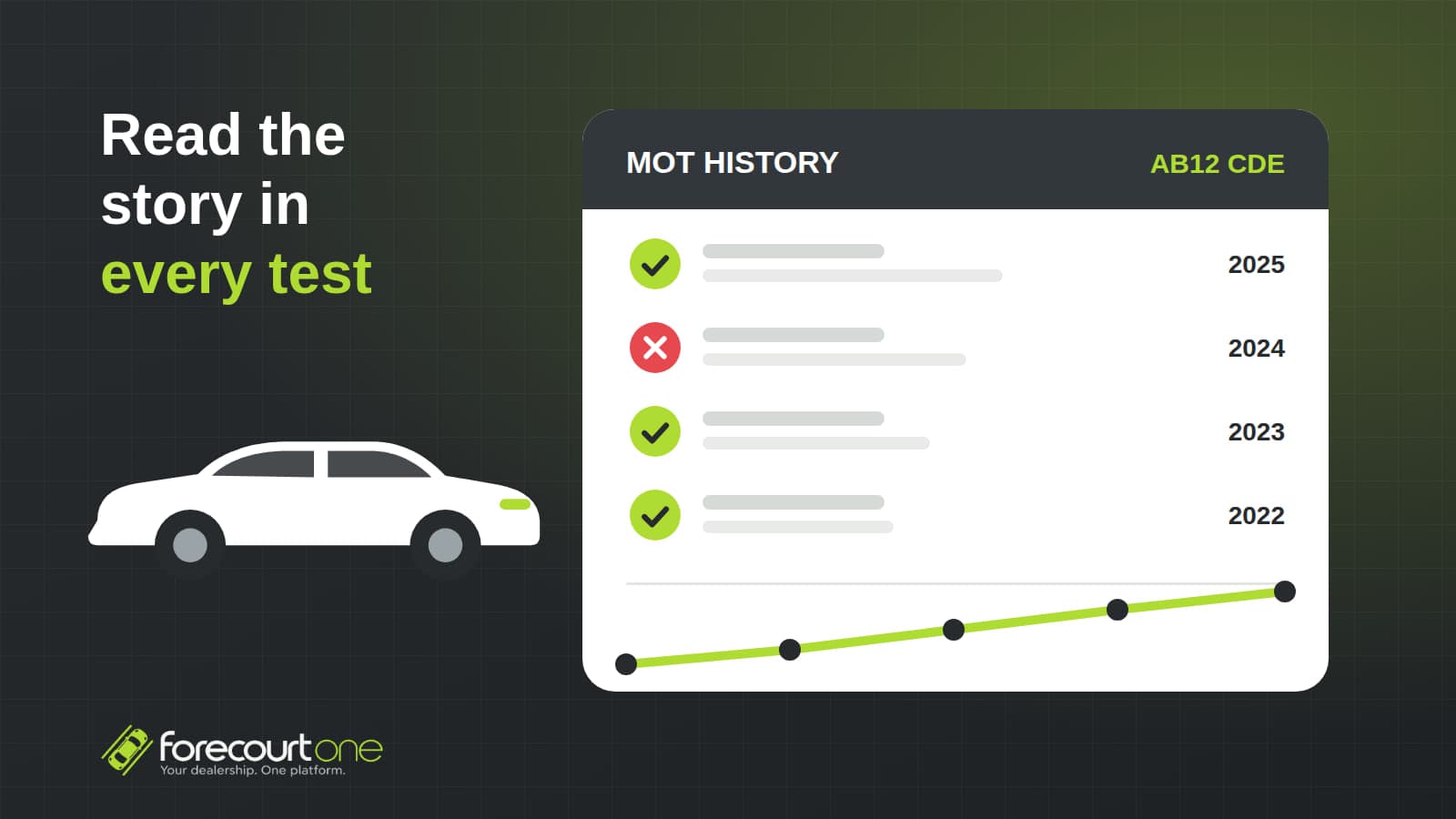
Go to the GOV.UK MOT history service and enter the registration number. There is no charge and no account. You will see each test with its date, result, recorded mileage, failure reasons and advisories, plus the expiry date of the current certificate. It takes about a minute per car.
You can also confirm the basic vehicle details with the DVLA vehicle enquiry service, which shows the make, colour, tax status and the date the V5C logbook was last issued. If those details do not match the car or its paperwork, stop and ask why.
What does an MOT history show?
An MOT history lists every recorded test for the vehicle with its date, pass or fail result and odometer reading. It also shows the reasons for any failure, graded dangerous or major, plus minor defects and advisory notes, and when the current certificate expires. Read together, they show how the car has been maintained.
For each test you can usually see:
- the date and whether the car passed or failed
- the odometer reading the tester recorded
- the reasons for any failure, graded as dangerous or major
- minor defects and advisory notes
- when the current certificate runs out
In Great Britain most cars need their first MOT at three years old (four in Northern Ireland, which runs a separate system). A nearly new car may have little or no history yet, and that is not a warning sign on its own.
What should a dealer look for in the failures and advisories?
Look for patterns rather than single results. A one-off failure on bulbs, wipers or tyres is normal. Repeated advisories for the same item, structural corrosion and long gaps between a fail and the next pass are the signs that a car has been neglected and will cost you money.
Repeated advisories
Advisories are items the tester noticed but did not fail. When the same advisory appears year after year, such as corrosion on a brake pipe or a slight oil leak, the previous owner chose to live with it. Sooner or later it becomes a failure, and that cost lands on you or your customer.
Structural corrosion
Corrosion advisories on suspension mounts, sills or subframes deserve extra attention. They can be expensive to put right, and they are exactly what a buyer's inspection will find.
Fails fixed on the day
A fail followed by a pass on the same day usually means the work was done straight away, which is a good sign. A long gap before the next pass may mean the car sat unused, or was driven without a valid MOT.
How can you tell if the mileage is genuine?
Read the recorded mileages in date order. They should always go up, by amounts that fit how the car has been used. A reading lower than the one before is a strong reason to stop. Then check the dashboard against the last recorded figure and the time since that test.
A sudden jump or a year with almost no miles can have an innocent explanation, but it should match what the seller tells you and the service records. If the story does not add up, find out now rather than when your customer runs their own check.
What does a gap in the MOT history mean?
A missing year usually means the car was off the road, in storage or declared SORN. It can also mean it was driven without an MOT. Ask the seller, and look for supporting paperwork such as service invoices, a stamped book or a SORN confirmation that explains the gap.
How should the MOT history change your offer?
Use it to price in the work the car is likely to need. Advisories on tyres, brakes, suspension and corrosion point to preparation costs, so reduce your bid to allow for them. A clean, consistent history supports a stronger retail price. Mileage that goes backwards or serious structural corrosion is a reason to walk away.
In practice:
- Estimate preparation costs. Advisories on tyres, brakes and suspension are a ready-made list of what the car may need before sale.
- Adjust your bid. If a car needs tyres and front discs, allow for them in what you pay. Our guide to pricing used cars for profit shows how preparation costs feed into the price.
- Plan your sales story. A clean, consistent history is easier to sell, and many buyers check it themselves.
- Know when to walk away. Mileage that goes backwards, serious structural corrosion or a history that does not match the paperwork are reasons to pass.
Is an MOT history enough before buying a car for stock?
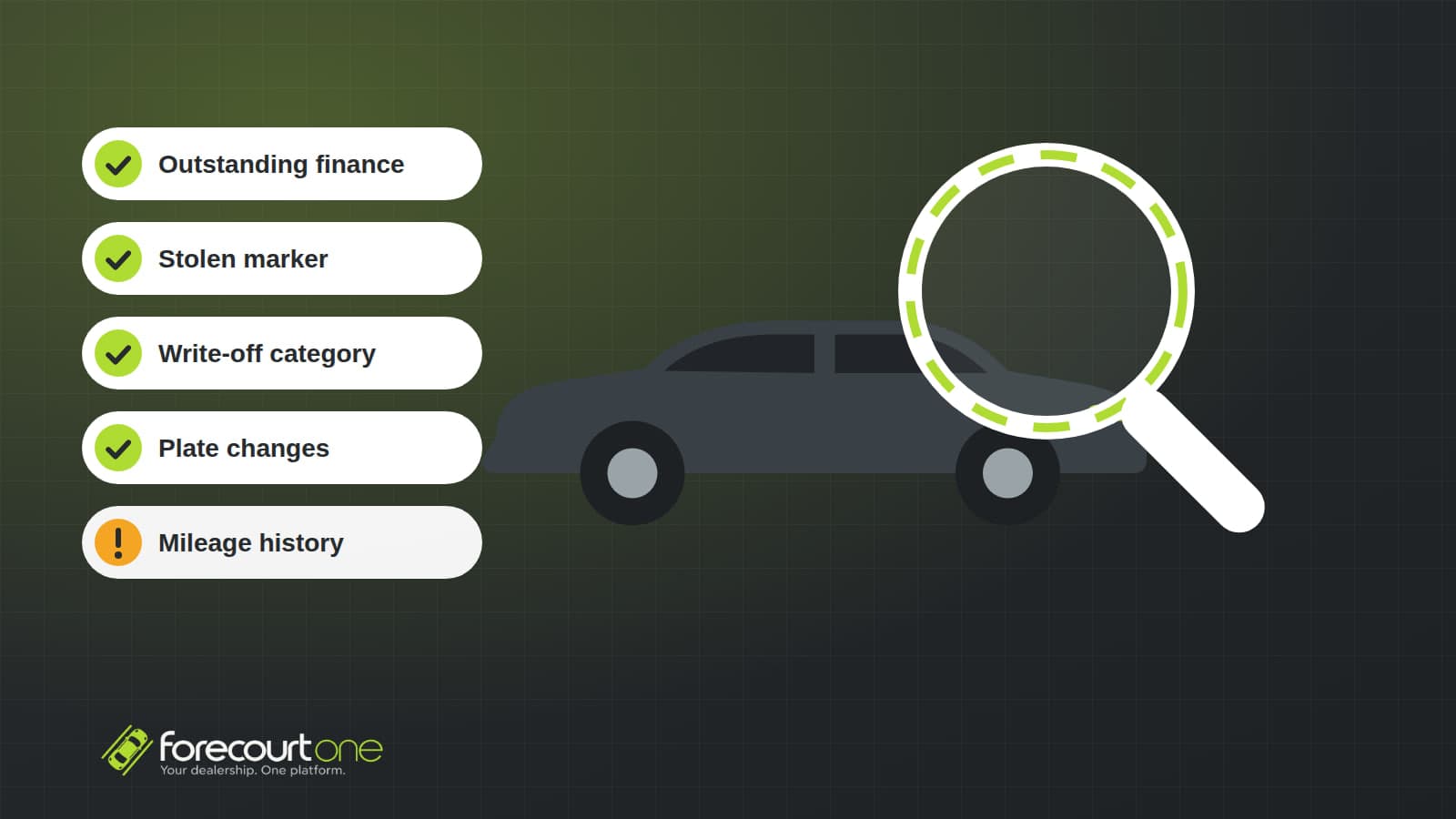
No. It tells you about roadworthiness on each test date. It does not show outstanding finance, a stolen marker or an insurance write-off category. Pair it with a full vehicle history check before buying stock, a proper inspection, a test drive and a look at the service records.
Make the check part of every purchase
The simplest way to make sure the check happens is to build it into the moment you add a car to stock. In Forecourt One, typing a registration or photographing the number plate pulls in the vehicle details and MOT history straight away, so the record sits in your stock book from day one. You can see it working in the interactive demo. Every package includes the MOT history lookup and reg checker, and Pro and Enterprise add a full vehicle history check (see pricing).
To try it on your own stock, start a free 14-day trial or book a short demo.
Questions
Is an MOT history check free?
Yes. The GOV.UK MOT history service is free and only needs the registration number. There is no account to set up.
Can an MOT history show if a car has been clocked?
It shows the mileage recorded at each test. A reading lower than an earlier one is a strong warning sign, but not proof on its own, so investigate before you buy.
Why does a car have no MOT history?
Most cars in Great Britain need their first MOT at three years old, so newer cars may have none yet. An older car with gaps may have been off the road, so ask the seller and check the paperwork.
Does an MOT history show outstanding finance?
No. Outstanding finance, stolen markers and insurance write-offs need a separate vehicle history check.